A long time ago, in a studio far, far away, a bunch of people got together to make a movie.
A lot of it was made up of stuff nobody had ever tried to do before. A lot of it was the same old things that had been seen and done a thousand times before.
Its leading players weren't bankable stars. Much of the crew was green and untried. And while some, as on every film set, dreamt what they were doing would find an enthusiastic audience and great financial success, I doubt even any of those foresaw the force of nature they were collaborating to unleash.
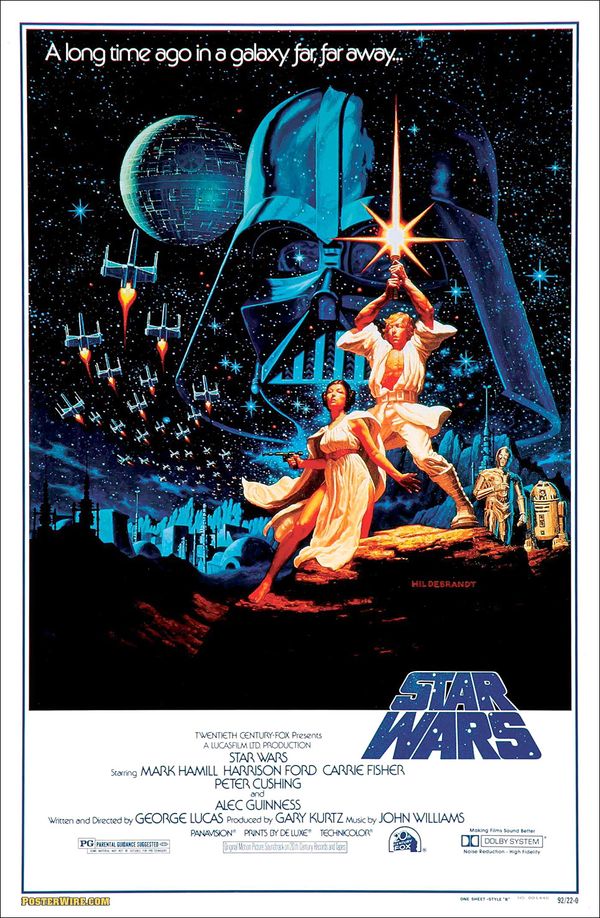
As hard as it may be to believe these days, there was little or no advance publicity for "Star Wars". I went to see it on its opening weekend knowing nothing but what I could glean from the poster. Some kind of hero with a gleaming sword, a damsel in distress, robots and some kinda cool looking war in space.
It just seemed more interesting than whatever else was opening that weekend.
But from the first frame, you knew it had something special.
Something that has made fortunes for a couple of generations and will for generations more. Something that has become culturally iconic and important. Something that his given birth to philosophical treatises and textbooks filled with semiotic insight most probably to the surprise of those who made it.
To them, as it was made, it was just a movie. A movie with deleted scenes, alternate takes, different angles, and bloopers the audience was never meant to see. A movie with characters who would never be turned into action figures, effects that didn't work and audio that needed to be fixed in post.
All of these have been gathered over the years by filmmaker Jamie Benning and augmented with commentary by the movie's cast and crew into what he calls a "filmumentary", meaning that while you are watching the original film, you are also seeing all those things which were excised or augmented to create the final product.
"Star Wars Begins" is a remarkable achievement in documenting the creative process, of exposing the fact that great films are not the work of genius artists that spring fully formed to the screen.
They're ideas that get revised and re-imagined by a lot of different people doing the best they can under less than perfect conditions.
This is a documentary well worth a couple of hours of your time, whether or not you have seen the latest incarnation. This is where and how it all began.
While Christmas is a celebration of the birth of Christ, at its core its an embodiment of the Christian tenet better known as The Golden Rule -- "Do unto others as you would have them do unto you". An opportunity to share material goods, kindness and empathy to all those around you.
That's why the so-called "War on Christmas" with its politically correct restrictions on whether its okay to use certain greetings and edicts to refer to lighted foliage as "Holiday Trees" doesn't make any sense when you really think about it.
Not only does The Golden Rule do no harm to anyone, it's written into the holy texts of every other religion supposedly snubbed or marginalized by those who celebrate Christmas.
And for non-believers, I think you'd be hard-pressed to find any atheist who disagrees with showing kindness to others.That trait is pretty much who we are as people.
Christmas is just the time when the proof is most obvious.
Recently, the faith based UPTV network decided to try an experiment to see just how prevalent the desire to give of ourselves and be kind to others was. And this was the result...
Moving closer to home, my favorite airline always goes out of its way to show their appreciation of those around them at Christmas. What they've done in the past has become hard to top. So this year Canada's Westjet decided to try even harder, setting the 2015 bar at providing one Christmas miracle for each of their 12,000 employees...
So you see, for all its religious connotations, the true meaning of Christmas is simply a reminder to share some of the good in each of us with someone else. And if you can't do that -- well, instead of pissing on somebody else's party, why not just suck it up and take Sponge Bob's advice... And Enjoy Your Sunday.
Writing movies is hard. Making them made is harder. Getting people to
pay to see something they’re repeatedly told is complicated and hard to
understand is nearly impossible. So smart writers avoid writing about complicated things that are hard
to understand. Unless they’re really, really smart writers. Writers like Michael
Lewis. The first Michael Lewis book I read was “Moneyball”, a book so good
it made you want to bite your arm. A book that deserved to become a movie. And
one that didn’t for more than a decade because it was literally too “inside
baseball”. Imagine pitching a studio exec a story about people who spend all
their time crunching baseball stats. Imagine finding an audience that wanted to
see a movie about baseball stats. Pitch “Hulk smash”. They get it. Pitch “It's about getting things down to one number. Using the stats
to find value in players that no one else can see” -– and their eyes have
already glazed over. As they expect the audience’s eyes to glaze. Don’t even get me started on how hard a pitch for “The Big Short” a
book about the subprime default swaps that cratered the mortgage market in 2008
would’ve been. But Lewis and his publisher kept making the rounds and people smarter
than most of the gatekeepers kept reading his books and one of those people
finally used her actress star power to put Michael Lewis’ writing before an
audience. In 2009, Sandra Bullock brought another Lewis book “The Blind Side”,
this one about the intricacies of the college football draft, to the screen. And
Hollywood finally got what he does. He shows that all those supposedlynunintelligible
numbers are describing people. “The Blind Side” won an Oscar and a ton of Critics awards while
(perhaps more important) pulling in 10 times as much as it cost to make at the
box office. Hollywood finally realized Michael Lewis must be onto
something. In 2011, another actor, Brad Pitt got “Moneyball” made, earning six
Oscar nominations, garnering more critics awards and taking in more millions at
the box office. Which brings us to “The Big Short”. Opening this weekend with a cast
of not one, not two -- but four A-list actors who could all open a major studio
film on their own. And again, getting past the gatekeepers because one of those actors
(Pitt) can call his own shots. This is the season when adults go back to the movies. And there are
great films like “Spotlight” and “Carol” and “Creed” and “Trumbo” and “The
Hateful Eight” that anybody calling themselves an adult should see. But for my money, “The Big Short” should be on top of that
list. Forget that it’s about something complicated and hard to understand.
Because it’s not. Those numbers being thrown around all come down to people. And
if there’s one thing actors know it’s that people go to see movies about
people. So for your viewing pleasure on this Sunday, I append both a trailer
for “The Big Short” plus a roundtable of three of its cast along with Lewis and
director Adam McKay describing why they became a part of it and why the
gatekeepers were so wrong for so long. Enjoy Your Sunday. “The Big Short” – Trailer
One reason is that I grew up in the flattest part of Saskatchewan. Didn’t see my first hill until I was 12.
The other is that later in life I learned to ski.
Oh, I’d claimed I could ski before then. Lied to a casting director to get a part I wanted. I’d seen people ski. Didn’t look that hard.
Felt a little different standing at the top of a slope with boards strapped to my feet. But just in time, the director decided he needed somebody in my onscreen super-cool ski party to drive a snowmobile and I actually did know how to do that.
Even that guy who fell halfway down Everest didn’t kick out of his bindings as fast.
But I eventually did learn to ski. Fell a lot but completely embraced the thrill. And my last night on the slopes I fell in love with night skiing.
All of us who work with light have a special affinity to those situations in which light becomes magical and there was something about the moonlight, the snow and run lights reflecting on ice crystals in the air that made the experience unforgettable.
Next morning I took a tumble that put my back into agonizing spasms for weeks and ended any chance of my becoming the next Warren Miller.
But I’ll never forget that night and that quality of light and continue to bask in its afterglow.
Recently the people who make Philips televisions created a film expanding on the magic of night skiing to sell their new line of LED televisions. And it’s equally as unforgettable.
It’s also fittingly called “Afterglow”.
If you don’t ski. This might convince you it’s time to start.
Enjoy Your Sunday.
The full film by Sweetgrass Productions can be found here.
Home invasion agendas are generally up to the invader. But anybody knocking on my door today will be handed a paintbrush or hammer and forced to do some construction work no matter their inclination or Do-It-Yourself talents.
I’ve been living in renovation chaos for the last couple of weeks and it ends today. Well, more accurately probably Monday or Tuesday, but I like sounding focused and determined.
So today’s post is short. As is the home invasion short appended below. A very funny little film by Jason Kupfer.
It’s also got a Thanksgiving theme for those still working off a Turkey binge, revealing that even in chaos my thumb remains on the pulse of the culture.
A wise man once said, “Never be afraid to see what you see”. In other words, if the Emperor has no clothes, you shouldn’t be loath to point it out.
But a lot of people keep quiet on what they see because someone on Anti-social media might imply merely for making an observation makes you a neo-con/racist/bigot/xenophobe/chauvinist/whatever.
There’s a growing desire among some to make sure everybody sticks to an accepted narrative, even if that narrative isn’t logical -– y’know like actual narratives are supposed to be.
Consider the current Trudeau government edict that Canada will accept 25,000 Syrian refugees by the end of 2015. A process they have decided to complete within six weeks.
Now, before anybody gets sideways, I have absolutely no problem with bringing in Syrian refugees to make a fresh start. Don’t care if their religion is Muslim, Christian, Jew, Yazidi or Jedi.
Just want somebody official to have a chat with them and be more than a little certain they’re not a criminal, fanatic, gay-basher, former ISIS combatant or fond of female genital mutilation.
It might be worth pointing out 25,000 is only a couple of hundred more refugees from Iraq and Syria than we took in under the evil, heartless and incredibly insensitive Harper Government.
Indeed, Canada now offers a safe haven to 1 of every 10 legitimate refugees annually rendered stateless around the world. Not half bad for a place we’ve been repeatedly told became a despised international pariah in the past decade.
So – why the rush? And why the “You’re a racist! You’re a Xenophobe!” rhetoric directed at the 67% of Canadians not in favor of rushing.
Again –- that narrative thing…
We have a new government intent on proving it’s completely different from the last one, meaning they’re kinder, gentler and far more accepting of just about any world view.
To that end, Minister of International Trade Chrystia Freeland appeared on “Real Time with Bill Maher” on Friday night clearly eager to show our American cousins how much further evolved we are on the subject.
During one of my professional sojourns in Los Angeles, Bill Maher had a similar current affairs and comedy show called “Politically Incorrect”. And I was a regular member of the live audience.
Whether or not you share Maher’s sense of humor or his politics, you have to grant him two undeniable characteristics. He doesn’t allow political correctness to cloud his judgement. And he doesn’t suffer fools gladly.
Freeland delivered the current Canadian narrative and in the process set herself up to receive the brunt of both those Maher barrels.
What was revealed in this discussion (if you were open to seeing it) was that Ms. Freeland’s commitment to the “we’re so progressive” narrative overwhelmed any deeper thought into what the implications of bringing so many into a very different culture might mean – to both them and the existing culture.
And what may happen if you don’t think such things through?
Well, you could end up like the Prime Minister of Finland…
Similarly driven to prove his progressive cred, Finnish PM Juha Sipila offered up his own home to incoming Syrian refugees. He was probably looking forward to a “Sunny Days” photo op with a tearful single mom or doe-eyed orphan.
Instead he got this guy, who claimed he was just an normal 17 year old kid…
Now, I understand that whenever you invite a crowd you’re going to end up welcoming a few douchebags. But even as a proud Canadian, I have to admit, we’ve got a lot of douchebags already. Do we really need to import a whole bunch more?
Finland shares a lot of similarities to Canada. Climate, love of Hockey, etc. And Finland is already seeing a lot of problems from their own influx of Pre-vetted by the United Nations refugees.
Since we’ll be on the hook for Billions of dollars through this effort, shouldn’t we at least make sure we end up with people who truly want to be here -– and maybe embrace the Canadian values all of us want to see more of in the world?
UPDATE:
As I posted this the Trudeau government updated their refugee policy. Now, they’re only bringing in 10,000 by year end with another 15,000 arriving by the end of February. And most of those will be privately sponsored.
Interestingly, the government will not bring in single males. So one of the most persecuted groups, gay men, are out of luck.
And so is the Syrian father whose drowned son sparked the entire refugee debate in the first place. He still can’t come to Canada as Trudeau had insisted during the election campaign.
But then, single males, the ones causing most of the security concerns, won’t be entirely left out. NGOs, churches and mosques (even the radical ones) can still bring them in privately.
I don’t want to issue a douchebag alert just yet. But let’s just say it won’t surprise me. And I’m sure Chrystia Freeland will find a way to justify it in a way that doesn’t upset the narrative.
Few directors have influenced the way films are made as much as Alfred Hitchcock. The shots. The cuts. The sequencing. Lighting. Music. Performances.
Pretty much everything the man did has been built on or outright copied by the generations of directors who have followed him.
But one thing he did always annoyed the crap out of me.
The director’s cameo.
Oh, it was harmless at first. When nobody knew who he was. Just some tubby, balding gentlemen among the faces in the crowd.
But later it became a “thing”. Each new Hitchcock film was preceded by questions about how the director himself would appear on screen.
Even Hitchcock was aware that this was the kind of thing that momentarily kicked audiences out of the story and broke the willing suspension of disbelief to remind them they were just watching a movie.
So once he was well known, those moments usually occurred early on, before the plot had begun to take control.
But like everything else he did, Hitch’s cameos became an approved method for other directors to get in front of their own cameras. And a lot of them didn’t give a lot of thought to what the impact on the overall story might be.
“Hey, here we are building to the climax and there’s Quentin Tarantino!” (for example)
Now the vast bulk of most audiences would never have a clue who most of these guys were. But put yourself in the place of a TV series producer with a stable of directors appearing in dailies four a five times per season per director.
It always knocked me out of what I was trying to accomplish in the edit suite. And that drove me nuts.
Of course there was one guy who insisted in doing his appearances in the nude. But that’s another story.
Responding differently -- Hitch’s cameos became the jumping off point for a new homage to the great man by filmmaker Fabrice Mathieu.
In “Master of Suspense” Mathieu has built an entirely new story from all the elements that made Hitchcock the creative genius he was.
And this time Alfred Hitchcock is not just some background player. He’s the star.
Perhaps its what the master and all those other directors doing cameos wanted to be all along.
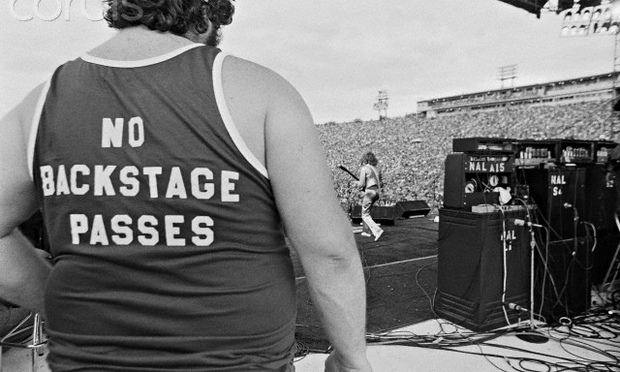
Three separate pieces make a rock concert. The band. The audience. The Roadies. Take away any and the show ain’t on.
Yeah, the band could carry in their own instruments and amps. But the set-up wouldn’t be as good and would take a lot longer. The music wouldn’t be balanced or sound the same in all parts of the venue. The players wouldn’t have the same energy. The crowd would invade the stage or otherwise misbehave.
Nope. Roadies are essential. They do the grunt work. They make sure all the technical problems are solved. They protect the band and the music. In many ways they love what the band does more than the guys getting all the adulation.
Roadies drive all night. They go without sleep so the band can rest. They do the drug buys. They comfort the Groupies who don’t get chosen after the show.
Roadies get electrocuted. They are swept away by windblown set pieces and light stands. They are crushed under trucks and collapsing stages. But nothing deters them from the task at hand.
They are willing to take a bullet for the music.
Friday night, Nick Alexander, a member of the road crew for Palm Desert’s “Eagles of Death Metal” was among the first to die in Paris’ Bataclan Theatre
His grieving family issued a short statement taking comfort in the fact that Nick died “doing what he loved”.
Other than acknowledging that no one else among their number or from their opening act, “The Deftones” was hurt, the “Eagles of Death Metal” have been silent since the attack.
Tragedies of this magnitude can kill a band. The notoriety alone might do that. Which would be a shame. “The Eagles of Death Metal” are one of the finest rock acts around right now. They’re a joy to see live and darn good fun to listen to anywhere anytime.
Their music is so infectious, you can have no doubt that the last living moments of Nick Alexander and the rest of those murdered in that Paris theatre were filled with happiness.
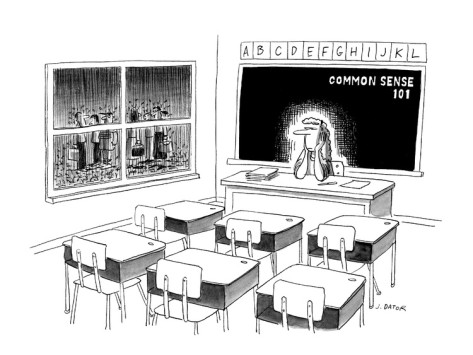
This week I had a lot of people bemoaning somebody else’s lack of common sense. Common sense about money. About driving. About relationships.
Now everybody has their own definition of common sense. Einstein once described it as the collection of prejudices you acquire by the age of 18. And we all know what works for you doesn’t necessarily work for anybody else.
But the reality is on a certain level common sense is not quite so common.
My own definition would go something like –- there are things I take for granted based on experience. And that experience comes from seeing the outcomes of actions. No decision ever stands alone. And if you think enough steps ahead, you’ll get to the point where negative consequences may outweigh the positive. Then you need to decide if the original decision is worth the risk.
So I guess common sense comes down to –- how far ahead are you thinking things through?
Friday night, Bill Maher had a great line about all those fed up with politicians who want somebody not part of the “political establishment” running things. “If their kid needed brain surgery, would they say “Not that guy, he’s a medical insider!”.
Common sense says sometimes you need to get past your agenda or at least think it through a little farther.
And this week I found a place where you can do that. A place where you can take a hard look at your prejudices or beliefs or whatever you think makes sense –- and take your thinking maybe a step or two further.
It’s called Prager U and you can find a bunch of their “instructional videos” here.
The “Lazy Sunday” posts started 400 weeks ago apparently. I haven’t really been keeping track. But I don’t think I’ve missed any Sundays since they began.
The original idea was to post a video I’d found online which I found interesting or inspiring or just fun.
They went up Sunday mornings to keep my traffic numbers up at a time when that was somehow important. The post was also either void of text or had only a minimal introduction -- symbolizing taking Sunday off and just lazing around like most normal people do.
But all things change over time.
And yet I’ve still maintained one rule. It’s all stream of consciousness that flows from whatever video I’ve found by the time I get around to doing that on a Sunday.
Sometimes that search only takes a few minutes and then I type for a few minutes more. Sometimes they get sweated over for a couple of hours. And there have been days when I just don’t have nothin’. But I get something up anyway.
So, in some ways the “Lazy Sunday” posts have been a writing exercise. You got space to fill, kid. A commitment. Like it or not. Ready or not. Write something.
And to be honest that’s the whole point of writing, making something from nothing.
A few years ago, the filming of a Bryan Cranston movie, “Cold Comes The Night” was brought to a halt by Hurricane Sandy. Cast and crew were stuck in a hotel waiting for the weather to clear.
Bored, Cranston started a contest among the production assistants, promising to produce the best short film one of them could come up with. Brandon Polanco and Spenser Granese won with “Writers Block” and three hours later Polanco was directing with Cranston starring.
A few days ago, a friend planning a European trip asked me to recommend some French hotels and it got me thinking about how much travelling I’ve done.
When I was a kid, there were lots of people “from the old country” who now and then went back to whichever “old country” they were originally from. And they’d come back with amazing stories about people and lifestyles I’d never imagined.
But as much as this sparked my desire to see the world, I also noted that rarely did anybody go someplace they hadn’t already been. It was as if it was preferable to stick the well trodden path.
Around the time my travel bug was hatching, there was a song on the radio by Canadian Country singer Hank Snow entitled “I’ve Been Everywhere” that rattled off place names almost faster than you could hear them.
I loved that song. Partly for how hard it musta been to sing. But also for the suggestion that just about anywhere was worth visiting. The place might be foreign but something about it would still be familiar.
And Hank was right. Wherever you go, a piece of the place stays with you and you leave a piece of yourself behind.
I discovered that Australia, for example, had a spectacular Country Music scene. Instead of songs about pickups and beer, their tunes celebrated Utes and Crownies, but reflected the same story telling spirit of the Country I’d grown up with and in.
I felt at home at the same time that I was about as far away from there as I could be.
While Googling French hotels to make sure they were still around, I came across an Australian version of that song that had first spurred me to travel.
Familiar yet totally different. Although I’ve now been to some of these places too.
Enjoy Your Sunday.
For aged mofo’s, here’s Hank’s original…
And for more of Australia’s Sunny Cowgirls, try this…
“Scrubs”, a half hour TV comedy ran for 7 seasons on NBC and then two on ABC from 2001 to 2010. I missed the first season or two and then only watched from time to time (although I liked what I saw) but was mostly busy with projects of my own –- and more’s the pity.
Because “Scrubs” was one of the most innovative shows of its time.
Created by Bill Lawrence based on the memoirs of his college roomate Dr. John Dorris, “Scrubs” would earn 117 award nominations including 17 Emmys, 3 Golden Globes and 4 Humanitas Awards winning 31 times.
A few weeks ago, I called up the first season of the series on Netflix and started watching it. That led to binge watching and a realization that, more than any other series I’m familiar with, “Scrubs” reflects what life is really like around the production of a television series.
It’s always been my opinion that a series is never fully formed in development and that no matter where the showrunners and scripts intend it to go, it’s the chemistry of the cast and crew that really dictates the finished products.
Actors have unknown talents and skills that writers begin to incorporate into story lines allowing characters to grow in unintended directions.
Audiences “like” some characters more than expected, shifting bit players into major roles and massaging major players into dimensions of character nobody delineated in the bible.
Producers and directors add bits that become running gags and then structural boilerplate. Everything about “Scrubs” reveals a creative intent less locked to format than dependent on finding something that hadn’t been tried before.
In these and so many other ways “Scrubs” distanced itself from the standard sitcom format. Storylines often skewed dark or into the realm of TV drama. Problems were left unresolved.
The gap between “Scrubs” and other sitcoms was never more stark than a Season Four episode entitled “My Life in Four Cameras” in which a dark storyline about a famous television writer diagnosed with lung cancer transforms mid-show into the way the same story would be told as a sitcom.
Suddenly the lights are brighter, the costumes tailored. All the female characters have cleavage and all the guys have signature shtick, and the “live” studio audience overwhelms everything.
Whether you are new to creating television or have been doing it all your life, “Scrubs” remains a touchstone to the way good television is made.
I have come to the conclusion that many of us will soon be in need of a stiff drink…
Winter is coming…
We’re days away from an election whose results might not make anybody very happy…
We have a nationally beloved ball team facing elimination…
Families are gathering for that traditional gauntlet of past animosities and current resentments known as the Thanksgiving dinner…
The moment may well come to each of us when we are in need of an antidote to what Life has visted upon us . And the Hystereo was invented to counter just such emotions and events.
Back in the 19th Century, Bacardi, the first distiller to create a clear “white” rum, established itself in a building in Santiago de Cuba that also housed a population of fruit bats in its rafters –- hence the company logo.
There, it prospered for almost a hundred years, even actively supporting Fidel Castro’s 1960 revolution. Unfortunately, when Fidel took over he seized the family assets and expelled Bacardi from Cuba.
Consider that the next time you wear a Che T-shirt into a bar.
The Hystereo was created soon after to both assuage the pain of exile and honor those who had dedicated their lives to the creation of a great rum.
It’s a complicated concoction to combine but well within the skillset of any reputable bartender or drinking establishment.
In the coming days it may be necessary for you to find one.